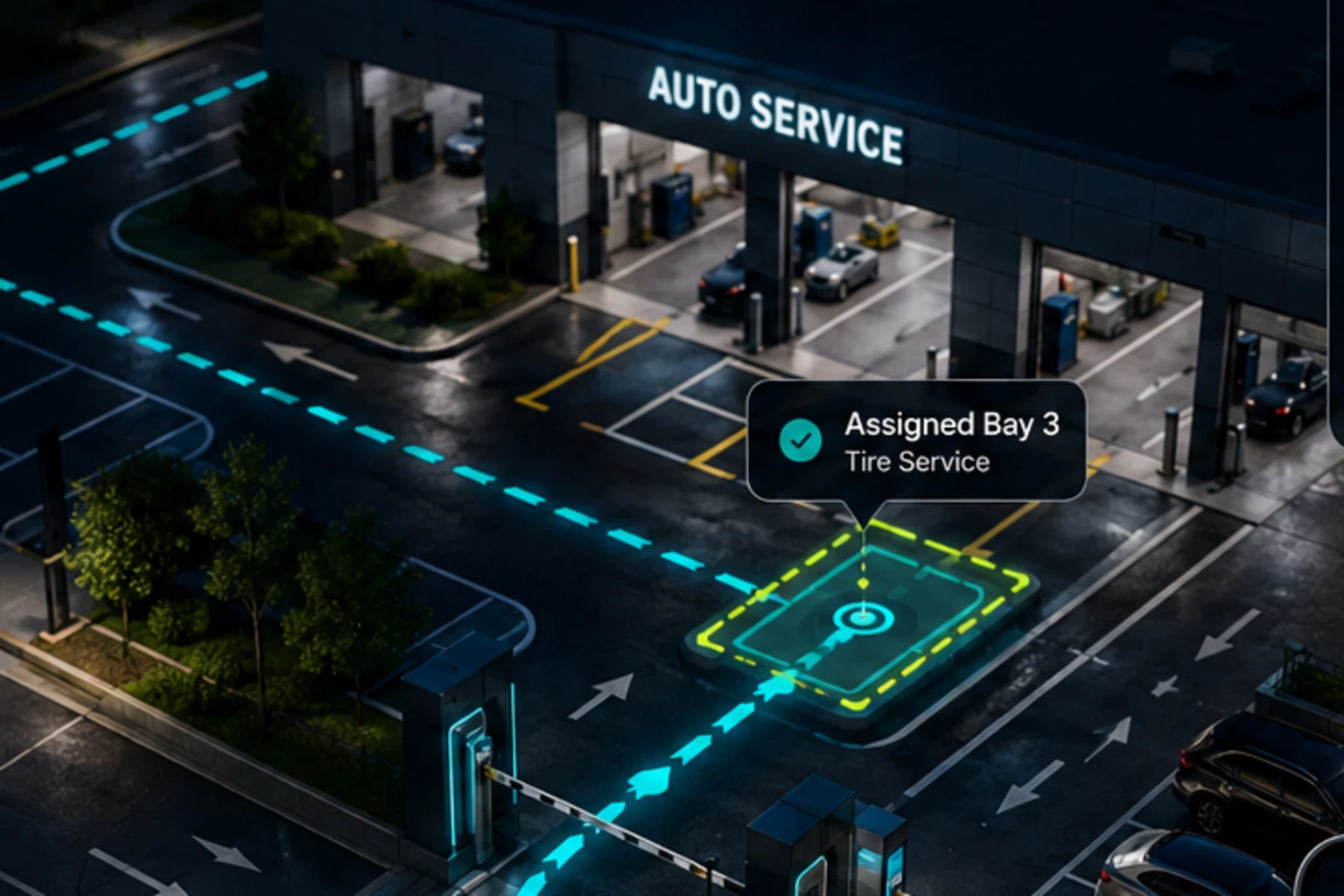
The correct entrance matters.
A property may have several driveways, controlled gates or an entrance that differs from the public map pin. Reaching the wrong one can interrupt the handoff before service begins.

ReadyCar SiteMap
Autonomous service does not end at the curb. SiteMap helps an unattended vehicle identify the correct entrance, follow the approved path through a property and reach the exact bay, charger, wash lane, inspection point or staging position.
The private-property gap
Street navigation is designed to reach an address. Service properties are designed around gates, traffic flow, waiting areas and specific resources. A human driver can read a sign, ask for help or adjust when a bay changes. An unattended vehicle needs those decisions made clear before it enters.
A property may have several driveways, controlled gates or an entrance that differs from the public map pin. Reaching the wrong one can interrupt the handoff before service begins.
Low-speed routes, one-way circulation, waiting points and areas shared with people or equipment require facility-specific direction.
The vehicle must reach the assigned charger, bay, lane or parking position—and know when that assignment or access condition changes.
The ReadyCar solution
SiteMap gives the provider a way to describe how an autonomous vehicle should enter and move through the service property. ReadyCar can then deliver the relevant facility guidance as part of the coordinated service.
The result is a clearer transition from public-road routing to private-property arrival without asking the vehicle to infer how the facility operates.
Identify the correct gate or driveway and any required waiting or authentication point.
Guide low-speed movement through the property using the route intended by the facility.
Direct the vehicle to the exact physical resource prepared for the work.
Support alternate entrances, blocked paths or reassigned resources without replacing the entire service plan.
From road to resource
ReadyCar coordinates the service location and exact physical resource.
The vehicle receives the correct entrance and relevant access instructions.
Facility-level direction supports the approved low-speed path through the property.
The vehicle reaches the assigned service point ready for the provider handoff.
Why it matters
SiteMap helps fleets and providers share the same understanding of where a service handoff should happen and how the vehicle should get there.
Replace a general address with an entrance, an approved path and an exact destination.
Give facilities a repeatable way to communicate the parts of arrival that human drivers normally interpret.
Help autonomous fleets use fixed, specialist, temporary and overnight locations through one coordinated operating layer.
Start with one service location